- All
- Product Name
- Product Keyword
- Product Model
- Product Summary
- Product Description
- Multi Field Search


Views: 0 Author: Site Editor Publish Time: 2025-10-17 Origin: Site


In today’s industrial landscape, the efficiency and reliability of rotating equipment such as pumps and motors depend heavily on bearing performance. Bearings operate in demanding environments where exposure to contaminants, moisture ingress, abrasive particles, and lubrication loss can lead to premature failure. These challenges not only reduce equipment lifespan but also increase maintenance costs, energy consumption, and unplanned downtime. In this blog, we break down the top 10 benefits of using bearing protectors in pumps and motors, along with expert insights to help you optimize machine performance, reliability engineering strategies, and maintenance practices.
This is where bearing protectors (bearing isolators) become a critical component in modern industrial sealing solutions. Designed to provide superior contamination prevention and lubrication retention, bearing protectors create a non-contact sealing barrier that outperforms traditional lip seals. By maintaining optimal internal conditions, they help improve pump reliability, asset protection, and operational efficiency.
With industries focusing on predictive maintenance, equipment reliability, and lifecycle cost reduction, bearing protectors have become essential for safeguarding critical machinery. From reducing seal wear and preventing lubricant leakage to enhancing energy efficiency and equipment uptime, their benefits are both immediate and long-term.
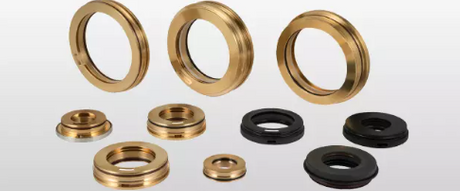
A bearing protector is an engineered accessory that sits between a bearing housing and the surrounding environment. It prevents dirt, water, and other contaminants from entering the bearing while ensuring lubricant stays within the bearing.
Labyrinth Bearing Protectors – Use intricate grooves to block contaminants while allowing slow leakage of lubricant.
Contact Bearing Protectors – Have a sealing element that physically contacts the shaft to prevent ingress.
Magnetic or Oil Seal Bearing Protectors – Use magnetic fields or oil barriers to repel particles and moisture.
Bearing Isolator – A non-contact bearing protection device designed to prevent contamination and lubricant loss while minimizing friction, commonly used in pumps and motors for long-term reliability.
High resistance to dust, water, and chemicals
Minimal friction to reduce energy losses
Compatible with various industrial pumps and motors
Easy installation and maintenance
Bearings account for a significant portion of rotating equipment failures. Studies show that up to 60% of pump and motor failures originate from bearing issues caused by contamination or lubrication loss.
Using bearing protectors:
Extends bearing life by 2–5 times
Reduces unplanned downtime
Lowers maintenance and replacement costs
Enhances overall system efficiency
1. Prolong Bearing Life
Bearing protectors prevent contaminants from entering the bearing assembly and maintain proper lubrication, resulting in significantly longer bearing life.
Example: In chemical plants, using labyrinth bearing protectors can extend ANSI pump bearing life from 6 months to over 3 years.
2. Reduce Maintenance Costs
By preventing premature bearing failures, protectors reduce the need for frequent maintenance, lowering labor and spare parts costs.
Actionable Tip: Schedule regular inspections every 3–6 months to check protector condition.
3. Protect Against Contaminants
Dust, dirt, and debris can infiltrate bearings, causing pitting and corrosion. Bearing protectors act as a first line of defense, keeping contaminants out.
4. Retain Lubrication
Bearings require proper lubrication to function efficiently. Protectors seal in lubricants, preventing leakage and maintaining optimal performance.
Pro Tip: Use lubricants recommended by the bearing and protector manufacturer to ensure compatibility.
5. Reduce Downtime
Unexpected bearing failures can halt production. Bearing protectors help ensure continuous operation, minimizing downtime and improving productivity.
Expert Insight: Industries with continuous pump operation report up to 30% reduction in downtime after installing bearing protectors.
6. Improve Energy Efficiency
Clean, well-lubricated bearings reduce friction, leading to lower power consumption for pumps and motors.
Stat: Bearings with protectors operating at optimal lubrication levels can save 5–10% in energy costs annually.
7. Enhance Equipment Reliability
By shielding bearings from environmental and operational hazards, bearing protectors improve overall equipment reliability and process stability.
8. Adaptable to Harsh Environments
Bearing protectors are available in stainless steel, high-temperature alloys, and chemical-resistant materials, making them suitable for extreme environments like mining, chemical processing, and wastewater treatment.
9. Easy Installation and Maintenance
Most bearing protectors are designed for retrofit applications, allowing installation without dismantling pumps or motors.
Step-by-Step Tip:
Shut down equipment and isolate power.
Remove old seals if applicable.
Install bearing protector according to manufacturer specifications.
Check alignment and lubrication.
Resume operations and monitor performance.
10. Comply with Industry Standards
Many bearing protectors comply with ISO, ANSI, or API standards, ensuring compatibility and quality assurance in critical applications.
Feature | Bearing Protector | Standard Bearing |
Contamination Protection | High – blocks dust, water, debris | Low – vulnerable to environmental contaminants |
Lubrication Retention | Maintains optimal lubricant levels | Can leak, reducing lifespan |
Maintenance Frequency | Low – fewer replacements | High – frequent repairs |
Downtime Impact | Minimal – longer operational life | Higher risk of unexpected shutdowns |
Material Options | Stainless steel, alloys, chemical-resistant | Usually steel |
Energy Efficiency | Improved – less friction | Standard friction losses |
Cost | Moderate – initial investment offset by savings | Lower upfront, higher lifecycle cost |
Identify Bearing Type – Check the bearing size, load rating, and speed.
Assess Operating Environment – Consider temperature, chemical exposure, and dust/water ingress.
Choose Protector Type – Labyrinth, contact, or oil seal, depending on protection and efficiency needs.
Material Compatibility – Ensure the protector material withstands your system’s chemicals and temperature.
Check Manufacturer Standards – ISO, ANSI, API compliance ensures reliability.
Plan Maintenance Schedule – Set periodic inspection intervals for longevity.
Expert Insights
According to the Pump & Motor Engineering Journal, bearings equipped with protectors last 2–4 times longer than unprotected bearings.
Chemical processing plants using labyrinth protectors report up to 40% reduction in unplanned maintenance.
Energy efficiency audits show that lubricated, protected bearings reduce motor power draw, lowering energy bills.
Real-World Applications
Water Treatment Plants: Bearing protectors prevent contamination from dirty water and chemical additives.
Mining Operations: Protects bearings in slurry pumps exposed to abrasive particles.
Chemical Plants: Guards bearings against corrosive chemicals and moisture.
Pulp & Paper Industry: Reduces downtime in high-moisture and dusty environments.
A bearing protector is a sealing device installed on pumps, motors, and rotating equipment to prevent contaminants like dust, moisture, and chemicals from entering the bearing housing. It also helps retain lubrication, reducing wear and failure. By improving sealing performance compared to traditional lip seals, bearing protectors significantly extend bearing life and enhance overall equipment reliability.
Bearing protectors should be inspected every 3–6 months, depending on operating conditions, environment, and equipment criticality. In harsh industries like mining or chemical processing, more frequent inspections may be required. Regular checks help identify wear, misalignment, or contamination risks early, ensuring optimal sealing performance and preventing costly bearing failures or unplanned downtime.
Yes, most bearing protectors are designed for easy retrofit on existing pumps and motors without major modifications. Many designs allow installation without dismantling the equipment, reducing downtime and maintenance costs. Retrofitting older systems with modern bearing isolators improves sealing efficiency, protects against contamination ingress, and enhances the overall reliability of rotating equipment.
Yes, bearing protectors can improve energy efficiency by 5–10% by maintaining proper lubrication and reducing friction in rotating equipment. Unlike traditional seals that may cause drag or leakage, advanced bearing isolators minimize energy loss while protecting internal components. This leads to smoother operation, lower power consumption, and reduced maintenance costs over the equipment lifecycle.
Industries operating in harsh or contaminated environments benefit the most from bearing protectors, including mining, chemical processing, wastewater treatment, oil and gas, and pulp and paper. These sectors face high exposure to moisture, abrasive particles, and chemicals. Bearing protectors help improve equipment uptime, reduce maintenance frequency, and extend the lifespan of critical rotating machinery.
Conclusion
Using bearing protectors in pumps and motors offers tangible benefits for industrial operations:
Extends bearing lifespan
Reduces maintenance costs and downtime
Protects against contaminants
Retains lubrication
Improves energy efficiency
Enhances equipment reliability
By selecting the right bearing protector type, material, and preventive maintenance schedule, companies can maximize equipment uptime, reduce lifecycle costs, and improve overall operational efficiency. In pump systems that rely on critical sealing components such as a Gorman Rupp seal, integrating effective bearing protection further strengthens system reliability by minimizing lubricant loss and preventing contamination-related failures.
If you want to improve your pumps’ and motors’ performance, consult with a TDS Fluid bearing protector specialist to select the optimal solution for your application.Protect your bearings, reduce operational costs, and enhance long-term reliability today.

